Fish
Fish Habitats
The Pūharakekenui/Styx River network can be divided into three different types of fish habitat as follows:
(i) Lower Reaches
Pūharakekenui/Styx River downstream of Main North Road, Kā Pūtahi/Kaputone Creek downstream of Guthries Road.
(ii) Middle Reaches
Pūharakekenui/Styx River between Main North Road and Sawyers Arms Road, Smacks Creek from the confluence with the Pūharakekenui/Styx River up to Smacks Close, Kā Pūtahi/Kaputone Creek upstream from Guthries Road to Main North Road, and permanent flows in Marshland Drains.
(iii) Upper Reaches
Pūharakekenui/Styx River upstream of Sawyers Arms Road, Kā Pūtahi/Kaputone Creek upstream of Main North Road, Smacks Creek upstream of Smacks Close.
Fish Migration
Almost all fish species in the Pūharakekenui/Styx River catchment spend some time at sea. The exceptions are the upland bully, which do not go to sea at all, and the brown trout that migrates within the river, only occasionally going to sea.
Generally spring is the time when most species are migrating in from the sea to the river, and autumn they are migrating back out sea.
In terms of life history, smelt and lamprey differ from the other species as they spend most of their life at sea and enter freshwater mainly to breed (anadromous fish). The remaining fish spend most of their lives in freshwater with adults moving into, or at least, toward the sea to spawn (catadromous fish).
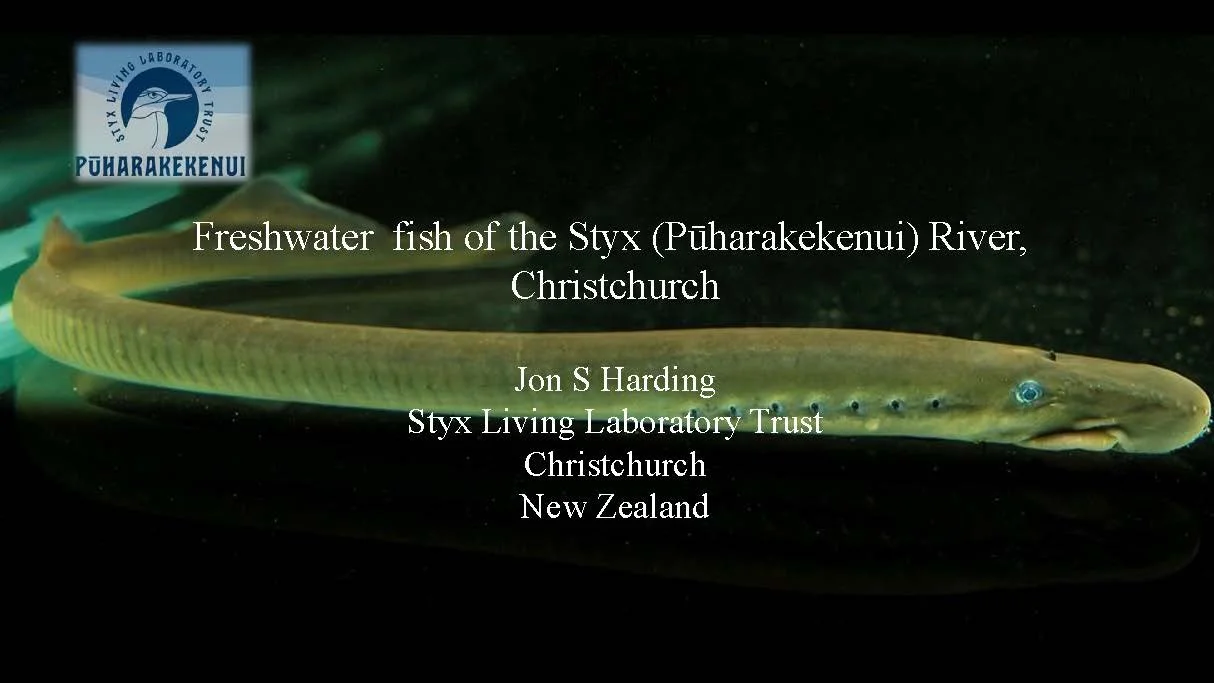
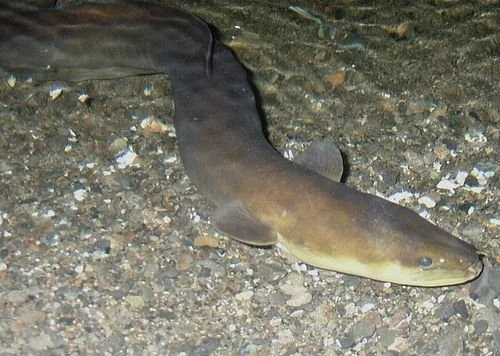
The known freshwater fish fauna is composed of ten species, of which eight have marine life stages. In order of probable abundance these are the: shortfin eel, longfin eel, common bully, upland bully, giant bully, brown trout, lamprey, common smelt, inanga, and black flounder. In addition to these, the tench and goldfish are two relatively recent, illegal introductions into the catchment. To date they have only been recorded in shingle pits and not the main waterways. In the lower river, some truly marine fish may also be seen. These include the yellow-eye mullet that forms conspicuous shoals, and may be confused for trout by some observers.